Insurance claims are one of the most unpredictable and expensive risks facing coach and bus operators.
A single incident can trigger:
- Increased premiums
- Legal costs
- Administrative burden
- Driver stress
- Reputational damage
And in many cases, the operator is assumed to be at fault — until proven otherwise.
This is where video telematics changes the equation.
This article explains:
- What video telematics really is
- How it protects your drivers
- How it reduces insurance exposure
- Why insurers increasingly favour fleets that use it
- And why it’s becoming essential in commercial passenger transport
What is video telematics?
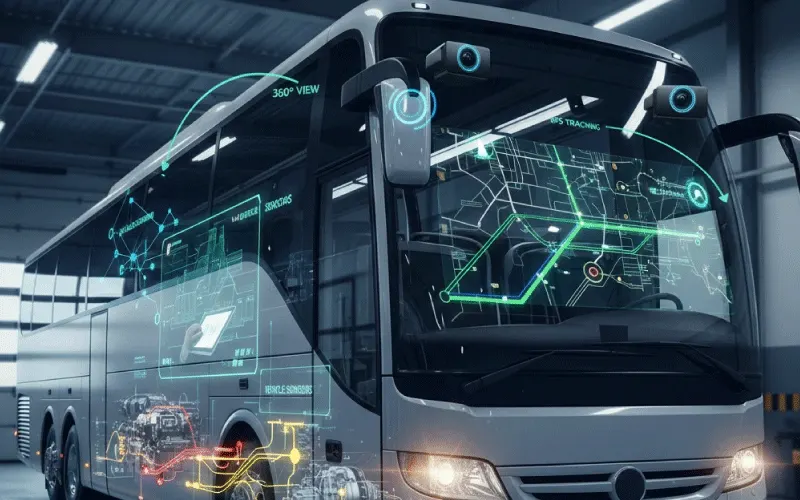
Video telematics combines:
- Forward-facing cameras
- Driver-facing cameras (optional, privacy-controlled)
- GPS tracking
- Vehicle performance data
- Cloud-based reporting
The system records contextual data around incidents — typically capturing footage before, during, and after an event.
Unlike basic dashcams, video telematics:
- Tags: harsh braking or impact events
- Stores timestamped footage securely
- Links footage to vehicle and driver data
- Enables remote review
This transforms accidents from he said / she said disputes into evidence-based assessments.
Why insurance claims are such a major risk for fleet operators
In passenger transport, claims can arise from:
- Road traffic accidents
- Passenger injury allegations
- Third-party vehicle damage
- Personal injury claims
- “Crash for cash” scams
Fraud and exaggerated claims remain a persistent issue in the UK. The Insurance Fraud Bureau reports that staged motor incidents continue to cost insurers millions annually.
Source: https://www.insurancefraudbureau.org
Without evidence, operators often settle claims simply to avoid escalating costs.
The real cost of a single disputed claim
An insurance claim rarely costs just the excess.
It can trigger:
- Increased premiums at renewal
- Legal defence costs
- Management time
- Driver interviews
- Operational disruption
According to industry data published by the Association of British Insurers, motor insurance fraud and inflated claims significantly increase overall premium pressure across commercial fleets.
Source: https://www.abi.org.uk
For fleet operators, protecting against even a handful of false claims per year can materially impact profitability.
How video telematics protects your drivers
1. Objective accident evidence
When an incident occurs, footage shows:
- Road conditions
- Traffic behaviour
- Signal compliance
- Driver reaction
This often proves:
- Your driver was not at fault
- A third party caused the collision
- A claim is exaggerated
Without footage, liability decisions rely heavily on conflicting statements.
2. Protection against staged accidents
“Crash for cash” scams involve deliberate collisions designed to generate claims.
Video telematics:
- Captures suspicious manoeuvres
- Records sudden braking behaviour
- Provides context that exposes fraud
The Insurance Fraud Bureau has highlighted how staged incidents frequently rely on a lack of evidence from commercial vehicles.
Source: https://www.insurancefraudbureau.org/insurer-support
Video evidence removes ambiguity.
3. Reducing driver stress and anxiety
Drivers in commercial fleets face enormous responsibility.
When incidents occur:
- Fear of blame
- Internal investigations
- Insurance interviews
Video telematics gives drivers confidence:
“The footage will show what happened.”
This improves morale and supports retention — critical in a sector facing driver shortages.
How video telematics protects your business
1. Faster claims resolution
Clear footage:
- Reduces investigation time
- Speeds up insurer decisions
- Avoids drawn-out disputes
Insurers increasingly recognise video-equipped fleets as lower risk.
2. Lower insurance premiums over time
Insurers assess risk based on:
- Incident frequency
- Claims severity
- Evidence availability
- Driver behaviour
Telematics-supported fleets can demonstrate:
- Safer driving patterns
- Reduced claim disputes
- Proactive risk management
Research from the Chartered Insurance Institute notes that data transparency improves underwriting confidence in commercial fleets.
Source: https://www.cii.co.uk
While premium reductions vary, fleets with telematics often see improved renewal negotiations.
3. Defending against passenger injury claims
In coach operations, allegations may include:
- Sudden braking injuries
- Falls while boarding
- Disputed seatbelt use
Video evidence clarifies:
- Driving style
- Passenger behaviour
- Environmental factors
This dramatically strengthens legal defence.
4. Identifying genuine risk patterns
Video telematics is not just defensive — it’s preventative.
It identifies:
- Harsh braking trends
- Speeding patterns
- Distraction indicators
- Repeated near misses
This allows operators to:
- Deliver targeted driver coaching
- Reduce incident frequency
- Improve fleet-wide safety culture
According to safety research referenced by the Road Safety Foundation, data-driven driver feedback significantly reduces incident risk.
Source: https://www.roadsafetyfoundation.org
Privacy and driver trust considerations
A common concern is: “Will drivers feel monitored?” Modern video telematics systems:
- Trigger recording on events (not constant surveillance)
- Store footage securely
- Restrict access controls
- Allow privacy policies to be clearly defined
Transparency is critical:
- Inform drivers
- Explain purpose (protection, not punishment)
- Share footage when incidents occur
When positioned correctly, most drivers view video telematics as protection — not surveillance.
The operational advantage beyond insurance
Video telematics also supports:
Training & performance improvement
Real-world footage allows:
- Evidence-based coaching
- Safer driving techniques
- Reduction of repeated mistakes
Compliance documentation
Event logs support:
- Internal reporting
- Legal defence
- Governance standards
Brand protection
Passenger transport is reputation-driven.
Clear evidence:
- Reduces public disputes
- Protects brand credibility
- Demonstrates professionalism
Why insurers increasingly favour video-equipped fleets
Insurers prefer certainty.
Video telematics provides:
- Verifiable data
- Contextual evidence
- Reduced fraud exposure
- Lower dispute costs
As claims costs rise across the industry, fleets without evidence may face increased scrutiny.
Operators who adopt telematics early position themselves as:
- Proactive
- Risk-aware
- Professionally managed
When should operators invest in video telematics?
It becomes critical when:
- Insurance premiums are rising
- False claims are increasing
- Incident disputes are common
- Fleet size is growing
- Contracts demand higher compliance standards
For many operators, one successfully defended claim can justify the investment.
The bottom line: evidence changes everything
Insurance disputes thrive on uncertainty.
Video telematics removes uncertainty.
It protects:
- Your drivers
- Your finances
- Your reputation
- Your long-term insurability