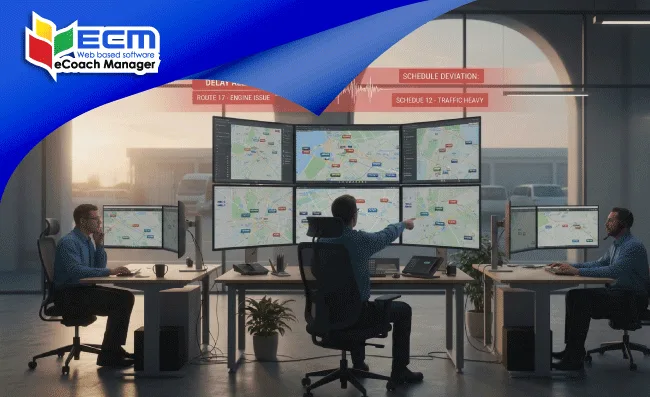
In modern fleet operations, timing is everything. Whether you’re managing coaches, minibuses, or corporate transport services, even a small delay can ripple across your entire schedule—affecting customer satisfaction, driver performance, and ultimately your bottom line.
Yet many operations teams are still reacting to problems after they happen.
This is where an Exceptions Screen becomes a game-changer.
Instead of chasing issues, you get live visual and audio alerts the moment something starts to go wrong—allowing you to intervene early, optimise journeys, and protect your reputation.
What Is an Exceptions Screen?
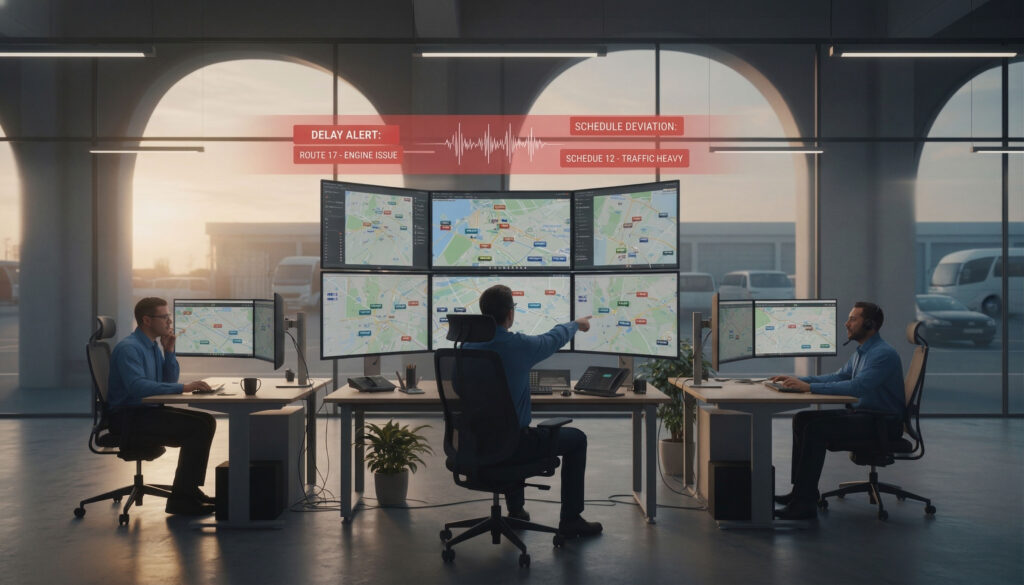
An Exceptions Screen is a real-time operational dashboard that highlights deviations from your planned journeys.
Rather than monitoring every vehicle manually, the system automatically flags key issues such as:
- Drivers not starting jobs on time
- Early departures from stops
- Late arrivals at stops
- Late departures from stops
- Estimated Time of Arrival (ETA) delays
These alerts are delivered through:
- Visual indicators (colour-coded warnings, flashing alerts)
- Audio notifications (instant sound alerts for urgent issues)
This allows operations teams to focus only on what matters—exceptions, not routine performance.
Why Traditional Fleet Monitoring Falls Short
Many fleet operators still rely on:
- Spreadsheets
- Manual check-ins
- Driver phone updates
- Reactive customer communication
The Problem:
- Delays Are Discovered Too Late
By the time a delay is reported, it has already impacted passengers or clients. - No Centralised Visibility
Operators lack a single view of fleet performance in real time. - Human Error Increases Risk
Manual monitoring leads to missed issues and inconsistent responses. - Scaling Becomes Impossible
As fleets grow, manual oversight becomes unsustainable.
An Exceptions Screen solves all of these challenges by turning your operations from reactive to proactive.
Key Alerts That Transform Fleet Operations
1. Drivers Not Starting Jobs on Time
When a driver fails to begin a job as scheduled, the system immediately flags it.
Why This Matters:
- Prevents cascading delays across multiple bookings
- Enables quick reassignment of vehicles or drivers
- Reduces customer complaints before they arise
Operational Impact:
Instead of discovering the issue after a missed pickup, your team can act before the first passenger is affected.
2. Leaving a Stop Too Early
Early departures are just as damaging as delays.
Risks:
- Passengers miss their ride
- Service reliability drops
- Complaints and refunds increase
With Exceptions Monitoring:
You can instantly detect early departures and intervene—ensuring drivers adhere to schedules and service standards.
3. ETA Running Late
Advanced systems predict delays before they happen by analysing:
- Traffic conditions
- Route progress
- Historical journey data
Benefits:
- Notify customers proactively
- Adjust routes in real time
- Minimise knock-on scheduling issues
This is where fleet operations shift from reactive problem-solving to predictive management.
4. Late Arrival at a Stop
Late arrivals impact:
- Customer satisfaction
- Service-level agreements (SLAs)
- Operational efficiency
Exceptions Screen Advantage:
Immediate alerts allow your team to:
- Communicate with customers instantly
- Adjust downstream schedules
- Deploy backup vehicles if needed
5. Late Departure from a Stop
A late departure can create a domino effect across an entire route.
With Real-Time Alerts:
- Dispatchers can identify bottlenecks instantly
- Drivers can be guided to recover time safely
- Future stops can be proactively managed
The Power of Real-Time Visual and Audio Alerts
An Exceptions Screen isn’t just about data—it’s about attention management.
Visual Alerts:
- Colour-coded severity (e.g. red = urgent)
- Flashing indicators for active issues
- Map-based tracking for instant context
Audio Alerts:
- Immediate awareness without constant screen monitoring
- Faster response times for critical events
Together, these features ensure your operations team never misses a problem.
How Operations Teams Benefit
1. Full Fleet Visibility
Monitor every vehicle, route, and journey in one place.
2. Faster Decision-Making
Instant alerts remove guesswork and reduce response time.
3. Proactive Problem Solving
Fix issues before they escalate into customer complaints.
4. Improved Resource Allocation
Reassign vehicles or drivers in real time.
5. Performance Tracking
Identify recurring issues and optimise long-term operations.
Preventing Issues Before They Happen
The real value of an Exceptions Screen lies in prevention, not just detection.
Example Scenario:
- A vehicle is predicted to arrive late due to traffic
- The system flags an ETA delay
- Operations reroute the driver
- Customers are notified in advance
Result:
No complaints. No missed expectations. No reputational damage.
Business Impact: Turning Visibility into Profit
Implementing an Exceptions Screen doesn’t just improve operations—it directly impacts revenue.
Key Gains:
- Higher fleet utilisation
- Reduced operational costs
- Fewer service failures and refunds
- Improved customer retention
- Stronger brand reputation
Over time, these improvements compound—giving your business a significant competitive advantage.
Best Practices for Using an Exceptions Screen
To maximise results, follow these strategies:
1. Prioritise Critical Alerts
Focus on high-impact issues (e.g. missed starts, major delays).
2. Train Your Operations Team
Ensure staff know how to respond quickly and effectively.
3. Integrate Customer Communication
Automate notifications when delays occur.
4. Analyse Trends
Use historical data to identify recurring problems.
5. Continuously Optimise Routes
Refine schedules based on real-world performance.
Future of Fleet Operations: Intelligent Exception Management
As technology evolves, Exceptions Screens are becoming even more powerful with:
- AI-driven delay prediction
- Automated decision-making
- Smart routing recommendations
- Integration with customer apps
This means fleets will increasingly operate with minimal disruption and maximum efficiency.
Conclusion: From Reactive to Proactive Fleet Management
An Exceptions Screen transforms how transport operations are managed.
Instead of reacting to problems after they occur, you gain:
- Real-time visibility
- Instant alerts
- Predictive insights
- Proactive control
For fleet operators looking to scale, improve service quality, and maximise revenue, this is no longer optional—it’s essential.